
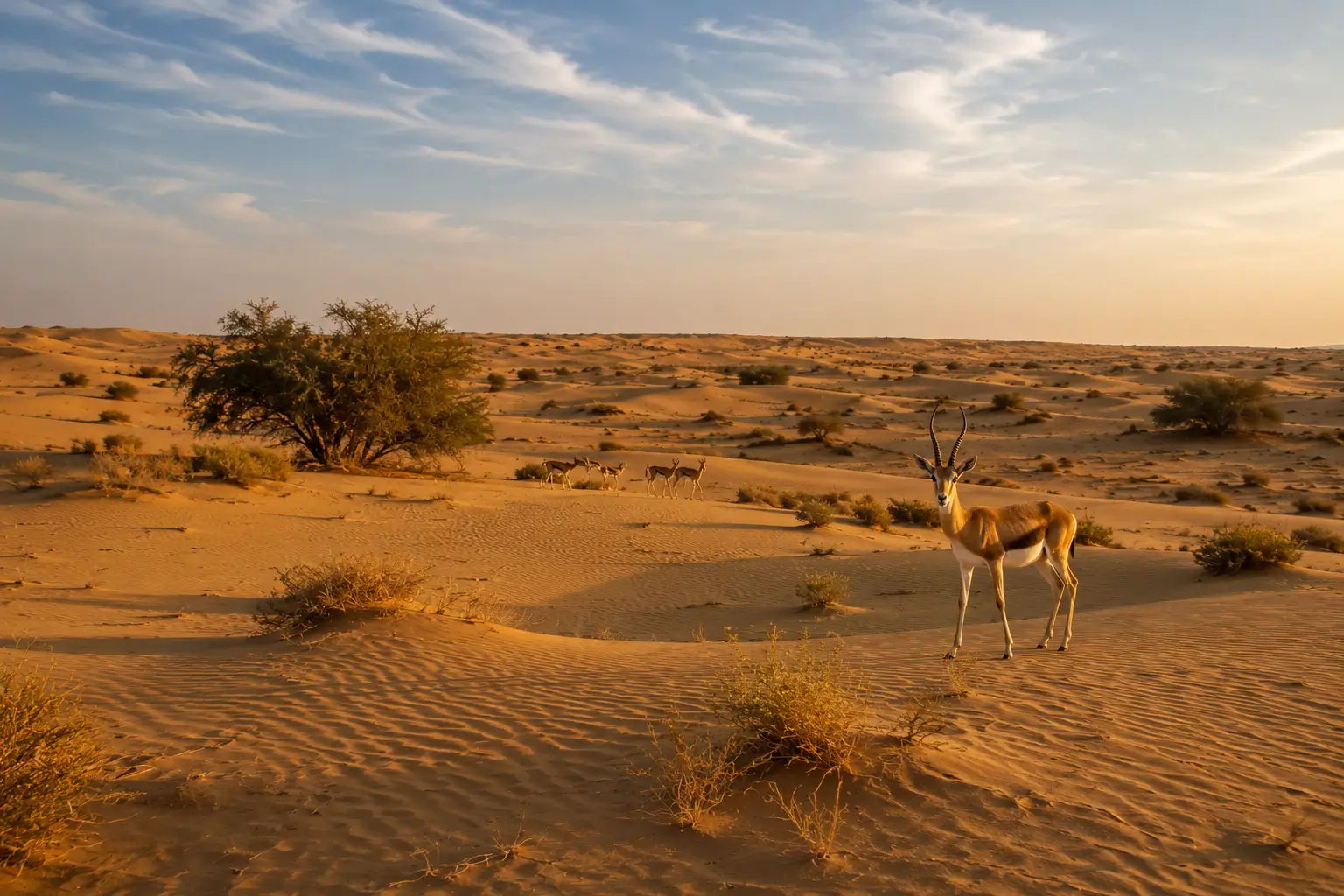
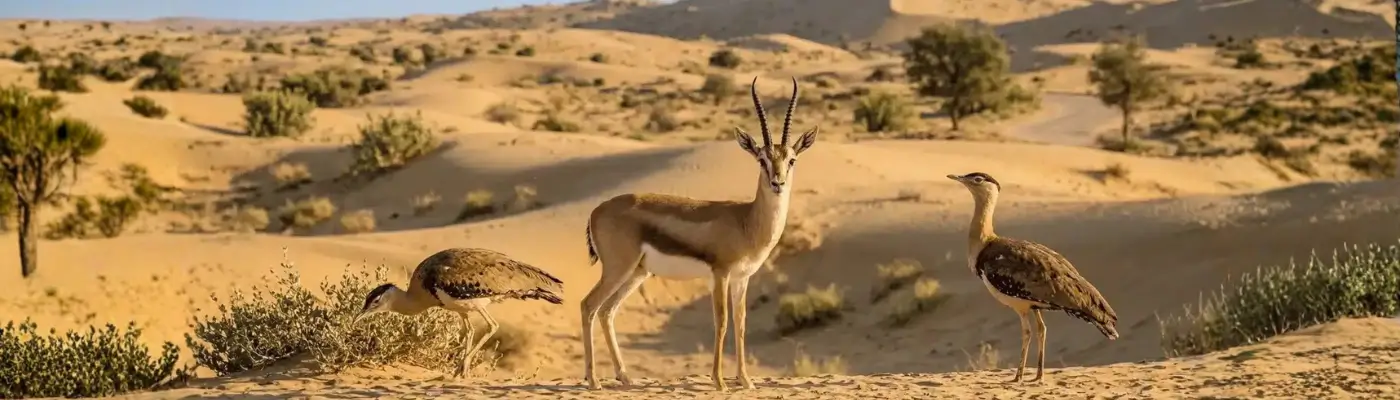
Desert National Park Jaisalmer protects one of India’s most remarkable arid landscapes across roughly 3,162 sq km of the Jaisalmer and Barmer districts. Gazetted in 1980, it reveals that the Thar is far from empty: fixed and shifting dunes, rocky plains, thorn scrub and dry salt-lake beds support chinkara, desert fox, desert cat, reptiles and an exceptional variety of resident and migratory birds.
Its conservation symbol is the critically endangered Great Indian Bustard, locally called Godawan, although every sighting depends on season, patience and chance. Sudasari is the principal visitor area for guided wildlife and birding experiences, including newly introduced pilot camel and camel-cart eco-safari routes. This is a protected habitat—not an adventure dune-bashing zone—so quiet observation, authorised access and respect for wildlife are essential.
Let Rang Mahal, Jaisalmer coordinate your private transfer, current permit enquiry, suitable vehicle, authorised local guide and thoughtfully paced wildlife itinerary.
Book directly and ask about seasonal tour offers for a graceful journey from palatial comfort into the wild heart of the Thar.
| Visitor information | Practical guidance |
|---|---|
| Protected area | Approximately 3,162 sq km across Jaisalmer and Barmer districts |
| Established | Gazetted in 1980 |
| Main visitor area | Sudasari |
| Published visitor hours | Commonly listed as 10:00 AM–5:00 PM safari reporting times may differ |
| Recommended duration | Approximately 4–6 hours including transfers serious birding may require most of the day |
| Best season | November–February October and March are also possible |
| Flagship species | Great Indian Bustard, locally called Godawan |
| Other possible wildlife | Chinkara, desert fox, desert cat, blackbuck, reptiles, vultures, eagles, falcons, harriers and sandgrouse |
| Safari access | Permission, guide, vehicle and route requirements must be confirmed |
| UNESCO status | On India’s Tentative List—not an inscribed World Heritage Site |
| Wildlife sightings | Always based on season, animal movement, patience and chance |
Planning note: Public timings, permits, guide requirements, vehicle access, pilot safari availability and ticket charges can change. Confirm everything before departure.
The park covers an enormous area, so the following estimates refer to the commonly visited Sudasari access area, not the nearest park boundary.
| Starting point | Approximate distance | Approximate travel time | Recommended arrangement |
|---|---|---|---|
| Rang Mahal, Jaisalmer | 40–45 km | 55–75 minutes | Chauffeured car or suitable MPV |
| Jaisalmer Railway Station | 42–47 km | 60–75 minutes | Pre-booked private vehicle |
| Jaisalmer Airport | 45–55 km | 70–90 minutes | Airport transfer followed by planned safari |
| Jaisalmer Fort | 42–47 km | 60–75 minutes | Pre-arranged taxi or private transfer |
Distances and times vary according to the confirmed entry point, route, road condition and seasonal diversions.
| Experience | Access and comfort | Environment | Main advantages | Points to consider |
|---|---|---|---|---|
| Sudasari wildlife safari | Remote suitable vehicle and guide may be required | Quiet grassland, scrub, rocky terrain and wildlife habitat | Best for birding, conservation learning, landscape photography and possible wildlife sightings | Limited facilities permits and sightings are not guaranteed |
| Sudasari camel or camel-cart eco-safari | Slow-paced but exposed to sun, wind and uneven movement | Designated 5 km or 10 km protected-area routes | Lower-speed nature experience and greater connection with the desert landscape | Pilot programme can be long, hot or bumpy and may not suit every traveller |
| Sam Sand Dunes | Easy tourist access with numerous camps and services | Large tourism-oriented dune area | Sunset, camel rides, jeep activities, entertainment and camp stays | Busier and more commercial not a substitute for a wildlife safari |
| Khuri Sand Dunes | Longer drive with comparatively fewer facilities | Quieter dunes and village atmosphere | Peaceful sunset, rural setting and less crowding | Fewer comfort facilities not the principal wildlife visitor zone |
Choose Sudasari for wildlife, birds, conservation and natural desert landscapes. Choose Sam for sunset entertainment and camp experiences, or Khuri for quieter dunes and village character.
A standard Sam dune-bashing excursion must never be advertised as a Desert National Park wildlife safari.
November to February is the finest period for comfortable exploration and winter birdlife. October and March can also be rewarding if the visit is planned for the coolest officially available session.
| Month or season | Broad temperature guidance | Visitor recommendation |
|---|---|---|
| October | Approximately 18–40°C | Warm select the coolest available session |
| November | Approximately 12–35°C | Excellent for wildlife and birding |
| December | Approximately 7–31°C | Cold mornings with pleasant daytime weather |
| January | Approximately 5–29°C | Prime birding period carry warm layers |
| February | Approximately 7–33°C | Excellent balance of weather and birdlife |
| March | Approximately 13–39°C | Visit early and avoid extended midday exposure |
| April–June | Approximately 19–46°C or higher | Generally unsuitable for most leisure travellers |
| July–September | Approximately 22–43°C with possible rain or dust | Route conditions and heat can affect access |
These are broad published ranges rather than daily forecasts. Desert wind, direct sun and open vehicles can make conditions feel colder or hotter.
Wildlife and birds are generally more active during cooler periods. However, public information currently lists standard visitor hours of approximately 10:00 AM–5:00 PM. Ask for the earliest officially available safari or birding slot and leave Rang Mahal at least 75–90 minutes before the confirmed reporting time.
| Season | Clothing and equipment |
|---|---|
| October–November | Breathable full-sleeved clothing, hat, sunglasses, sunscreen and closed walking shoes |
| December–January | Warm layered clothing, jacket, scarf, gloves for open vehicles and closed shoes |
| February–March | Lightweight layers, full sleeves, sun hat, sunscreen and additional water |
| April–June | Loose protective clothing, high-SPF sunscreen, hat and electrolytes reconsider the excursion during severe heat |
| July–September | Quick-drying clothing, weather protection and footwear suitable for damp or uneven ground |
Choose muted, non-camouflage colours that do not draw attention or cause confusion near sensitive areas. Avoid strong perfume, reflective clothing and noisy accessories.
Avoid single-use plastic, glass containers, loudspeakers, drones, laser pointers and flash photography.
| Traveller | Recommended preparation |
|---|---|
| Adults | Comfortable closed shoes, layered clothing, water, binoculars and sun protection |
| Infants | A long, exposed wildlife excursion is usually unsuitable consider a shorter road-based nature outing |
| Children | Best for patient children interested in wildlife carry snacks, water and sun protection and maintain close supervision |
| Pregnant travellers | Avoid camel rides, camel carts and rough off-road travel unless specifically cleared by a doctor |
| Senior citizens | Choose a private vehicle, shorter route and frequent rest breaks confirm seating and toilet access |
| Mobility-limited guests | Request a road-based observation plan because sandy and uneven terrain is generally not wheelchair-friendly |
Rang Mahal, Jaisalmer can assist with a suitable packed breakfast or refreshment plan, subject to the confirmed safari timing and park rules.
After the excursion, enrich the local experience with:
Eat only at an authorised stop or after the safari. Never feed wildlife, leave food scraps or discard packaging. Avoid a very heavy meal immediately before an uneven vehicle or camel-cart journey.
Desert National Park is a remote protected landscape, not a conventional landscaped tourist park. Facilities should be considered basic unless confirmed otherwise.
| Facility | Practical availability |
|---|---|
| Entry or forest check post | Available at designated visitor access points |
| Authorised guide | Recommended and potentially required pre-booking advised |
| Safari vehicle | Subject to route, permit and local availability |
| Camel and camel-cart safari | Pilot 5 km and 10 km Sudasari routes reconfirm current operation |
| Parking | Basic parking may be available near the reporting point |
| Toilets | Limited use clean facilities before leaving the city and reconfirm local availability |
| Drinking water | Do not rely on local supply carry sufficient water in permitted reusable containers |
| Café or restaurant | Not reliably available within the visitor zone |
| Shade and seating | Limited |
| Mobile network | Patchy or unavailable in some areas |
| ATM and fuel station | Use facilities in Jaisalmer before departure |
| Medical assistance | Limited locally major treatment requires return towards Jaisalmer |
| Wheelchair accessibility | Very limited due to sand, uneven ground and off-road travel |
| Accommodation | Use authorised accommodation outside sensitive areas unless an official eco-stay is confirmed |
| Binoculars, watchtowers and eco-huts | Announced for development under the 2026 eco-tourism initiative do not promise until operationally confirmed |
Wild camping, open fires and overnight stays inside protected areas should never be assumed permissible.
Confusion, collapse, severe breathlessness, chest pain, seizures or suspected heatstroke require urgent assistance. India’s unified emergency number is 112.
Keep the person calm and as still as possible, immobilise the affected limb and arrange immediate hospital transport. Do not cut or suck the wound, apply chemicals, use ice or tie a tourniquet.
This information provides general travel guidance and does not replace medical advice.
Sam is the most popular addition to a Desert National Park itinerary. It offers camel rides, sunsets, authorised jeep activities, cultural performances and camp stays. These activities are separate from the protected wildlife experience.
Khuri offers a quieter rural environment, village culture and less-commercial dune scenery. It suits travellers who prioritise peace over extensive tourist facilities.
The abandoned heritage settlement can be included on a longer desert itinerary, depending on the confirmed Sudasari route and available time.
A peaceful city attraction for travellers interested in birds, water views and photography, particularly during the winter season.
A fascinating geological attraction containing ancient fossilised remains. It lies on a different side of Jaisalmer and is usually better planned as a separate nature excursion.
It is known for its protected Thar ecosystem, desert landscapes, resident and migratory birds and its importance as habitat for the critically endangered Great Indian Bustard.
Sudasari is the principal visitor area commonly used for wildlife, birding and authorised eco-safari experiences.
The Sudasari visitor area is approximately 40–45 km from Rang Mahal, with a typical journey of around 55–75 minutes.
No. Desert National Park is a protected wildlife landscape. Sam Sand Dunes is primarily a tourism and entertainment area offering camel rides, jeep activities and camp experiences.
The Ministry of Tourism’s visitor information lists approximately 10:00 AM–5:00 PM. Gate hours, safari reporting times and seasonal access may differ, so reconfirm before departure.
Current entry, vehicle, guide and safari charges can change and may differ for Indian and foreign visitors. Confirm the complete price before booking rather than relying on an old online figure.
Permission or registration may be required for protected visitor routes. Requirements for guides, vehicles and photography should be confirmed in advance.
Depending on current permissions, visitors may have access to authorised vehicle-based wildlife viewing and pilot camel or camel-cart eco-safari routes of 5 km and 10 km at Sudasari.
No wildlife sighting can be guaranteed. The Great Indian Bustard is extremely rare, and sightings depend on season, movement, weather, guide knowledge and luck.
Yes, particularly for older children interested in wildlife and birds. Long journeys, heat, silence and limited facilities can be difficult for infants and very young children.
A private road-based visit may be possible, but camel rides, camel carts and rough off-road journeys may be unsuitable. Medical advice and a shorter itinerary are recommended.
Do not assume camping is allowed. Stay only at officially authorised facilities or established camps outside protected and sensitive wildlife zones.
Personal photography may be permitted in authorised visitor areas, subject to current rules. Avoid flash, drones, restricted infrastructure and close approaches to wildlife or nests.
Allow approximately 4–6 hours from Rang Mahal, including transfers and a standard nature experience. Dedicated birdwatchers should reserve most of the day.
"धोरां री धरती, गोडावण री शान—प्रकृति रो मान राखो, पधारो म्हारे जैसलमेर।"
"Land of the dunes, pride of the Godawan—honour nature and welcome to our Jaisalmer."
