
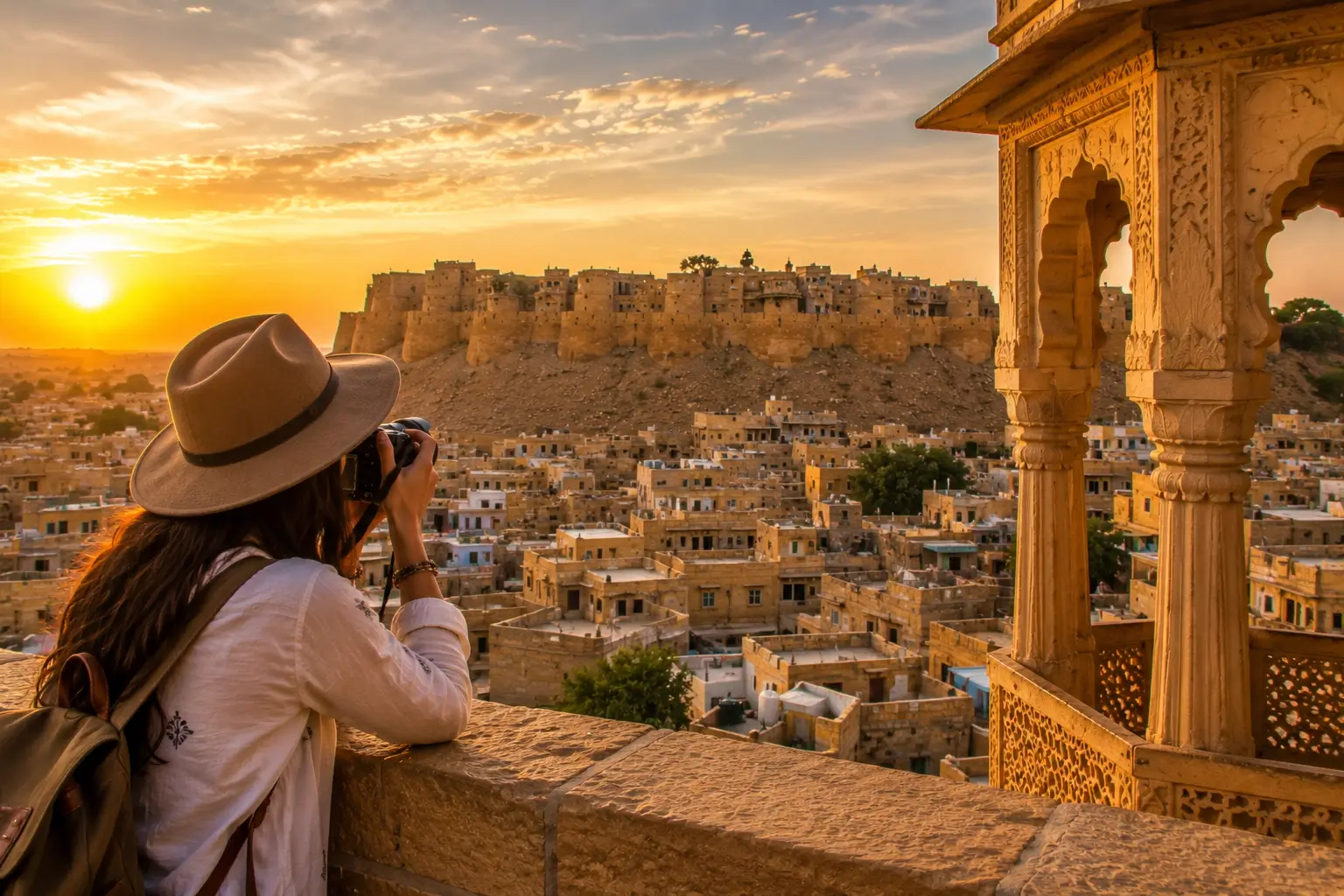
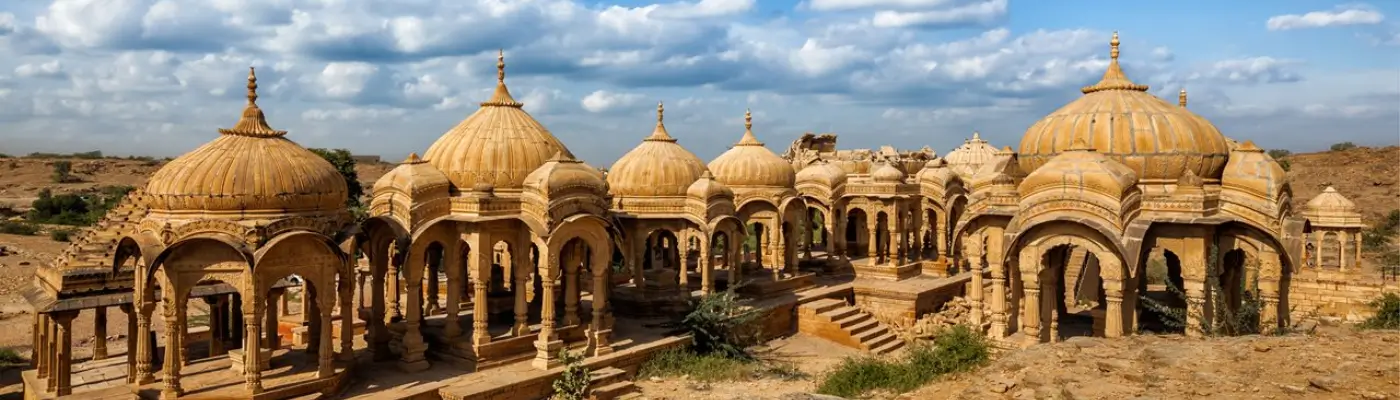
A Jaisalmer photography experience captures far more than monuments—it preserves the changing colours, living traditions and desert light of Rajasthan’s Golden City. From the honey-toned lanes of Jaisalmer Fort and carved façades of historic havelis to the reflections of Gadisar Lake, royal cenotaphs of Bada Bagh and sweeping Thar dunes, every setting offers a distinct visual story. Travellers can choose a casual photo walk, guided architectural tour, family portrait session, couple or pre-wedding shoot, wildlife photography excursion or carefully planned night-sky session.
The finest results come from matching each location with the right golden-hour light, clothing, lens and permission. Respect for residents, sacred spaces, wildlife and protected heritage is essential, while tripods, professional equipment, commercial filming and drones may require prior approval.
Allow Rang Mahal, Jaisalmer to curate your photography experience with location planning, comfortable transfers and suitable coordination for a professional photographer, makeup artist, traditional attire or special celebration shoot, subject to availability and permissions.
Book your stay and curated Jaisalmer photoshoot now to explore exciting seasonal offers and take home portraits worthy of a royal album.
| Experience detail | Guidance |
|---|---|
| Best season | October to March |
| Best natural light | Early morning and late afternoon |
| Suggested duration | 2–4 hours for one circuit full day for city and dunes |
| Popular styles | Heritage, portraits, pre-wedding, family, desert, wildlife and night sky |
| Most iconic combination | Jaisalmer Fort and havelis with a sunset desert session |
| Permit requirement | Depends on location, equipment and commercial purpose |
| Tripod use | Restricted at certain protected monuments and crowded sites |
| Drone use | Never assume it is permitted aviation and local approvals may be required |
| Suitable for | Solo travellers, couples, families, creators and professional productions |
| Advance booking | Recommended for photographers, makeup artists, vehicles and private locations |
| Starting point | Approximate distance | Suggested mode | Approximate travel time |
|---|---|---|---|
| Jaisalmer Railway Station | 1.5–2.5 km | Auto-rickshaw, taxi or private transfer | 8–15 minutes |
| Jaisalmer Airport | 14–17 km | Pre-booked taxi or private car | 25–35 minutes |
| Rang Mahal, Jaisalmer | 3–4 km | Private transfer, taxi or auto-rickshaw | 10–15 minutes |
| Jaisalmer Fort | 0 km | Walking photography tour | Immediate access 5–15 minutes uphill to central areas |
| Photography location | Approximate distance | Travel time |
|---|---|---|
| Rang Mahal’s designated palatial spaces | Within the property | No transfer |
| Jaisalmer Fort | 3–4 km | 10–15 minutes |
| Patwon Ki Haveli and old-city lanes | 3–4 km | 10–15 minutes |
| Gadisar Lake | 4–6 km | 15–20 minutes |
| Vyas Chhatri | 3–5 km | 10–20 minutes |
| Bada Bagh | 7–9 km | 20–25 minutes |
| Amar Sagar | 7–10 km | 20–30 minutes |
| Kuldhara | 18–22 km | 30–40 minutes |
| Sam Sand Dunes | 40–45 km | 45–60 minutes |
| Khuri Sand Dunes | 48–55 km | 60–75 minutes |
| Desert National Park–Sudasari area | 40–45 km | 55–75 minutes |
Distances vary according to the precise entrance, parking point, road conditions and selected shoot location.
| Location or style | Access and comfort | Visual environment | Main advantages | Points to consider |
|---|---|---|---|---|
| Rang Mahal Palatial Portraits | High comfort with hotel facilities nearby | Arches, jharokhas, courtyards, gardens, poolside and royal architecture | Controlled setting, changing convenience and suitable for families or couples | Prior hotel approval, timing and guest-privacy conditions apply |
| Jaisalmer Fort and Old City | Moderate walking, slopes and narrow lanes | Living heritage, sandstone gateways, temples, shops and rooftops | Most recognisable Jaisalmer setting with strong architectural variety | Crowds, residents’ privacy and site-specific photography restrictions |
| Patwon, Nathmal and Salim Singh Havelis | Easy to moderate city access | Detailed façades, balconies, carvings and historic interiors | Excellent for architecture, detail and editorial photography | Tickets, interior rules, limited space and tripod restrictions may apply |
| Gadisar Lake | Relatively easy access | Reflections, gateways, boats, birds and water | Best for sunrise, silhouettes and calm compositions | Crowded during evenings protect equipment near water |
| Bada Bagh and Vyas Chhatri | Moderate walking with limited shade | Royal cenotaphs, desert horizon and sandstone silhouettes | Strong sunset compositions and heritage portraits | Sacred associations, entry rules and commercial permissions must be respected |
| Kuldhara | Road transfer and uneven ruins | Abandoned settlement, stone walls and open desert | Atmospheric storytelling, fashion and wide-angle photography | Do not climb ruins harsh light and limited shade |
| Sam Sand Dunes | Easy road access with many tourism facilities | Large dunes, camels, sunset and movement | Convenient for couples, families and dramatic sunset portraits | Busy during peak season footprints, vehicles and crowds affect compositions |
| Khuri Sand Dunes | Longer drive with fewer facilities | Quieter dunes and rural desert surroundings | Less crowded, peaceful and suitable for natural portraits | Longer travel, fewer changing and emergency facilities |
| Desert National Park | Permit-led excursion limited facilities | Wildlife, grassland, rocky desert and open landscapes | Bird, wildlife and conservation photography | Sightings are never guaranteed telephoto lenses and strict wildlife discipline required |
| Night-Sky Photography | Remote transfer and technical preparation | Stars, dunes, silhouettes and long exposures | Distinctive astrophotography and creative light compositions | Requires a safe site, suitable moon phase, tripod permission and weather planning |
Rajasthan Tourism recommends morning and late-afternoon light because it is softer and richer. Begin approximately 30–45 minutes before sunrise or 60–90 minutes before sunset to prepare before the finest light appears.
| Months | Best photography time | Broad Jaisalmer temperature range | Guidance |
|---|---|---|---|
| November–February | Sunrise–10:00 AM : 4:00 PM–sunset | Approximately 5–33°C | Best overall season cold mornings and evenings require layers |
| March and October | Sunrise–9:30 AM final two hours before sunset | Approximately 13–40°C | Warm afternoons good golden-hour colour |
| April–June | Sunrise–8:30 AM only | Approximately 19–46°C | Extreme heat possible avoid prolonged outdoor sessions |
| July–September | Early morning or after rain, subject to weather | Approximately 22–43°C | Dramatic clouds are possible, but rain, humidity and dust can affect shoots |
Exact sunrise, sunset, moonrise and weather conditions should be checked for the shoot date.
Jaisalmer’s golden sandstone and neutral dunes contrast beautifully with:
Clothing should remain culturally respectful at temples, cenotaphs and inhabited heritage areas. Avoid unsafe trailing garments near steps, camels, moving vehicles or open flames.
October to March
April to September
Avoid changing lenses during strong desert winds. Keep unused equipment sealed and do not clean a camera sensor casually on the dunes.
| Traveller | Clothing and carrying guidance |
|---|---|
| Adults | Comfortable shoes, water, sun protection and only the equipment needed for the planned session |
| Infants and toddlers | Short sessions, weather-appropriate clothing, feeding supplies, shade and a quiet rest space |
| Children | Comfortable attire, secure footwear, water and frequent breaks avoid heavy costumes |
| Pregnant women | Light clothing, supportive footwear, chair breaks and a companion avoid climbing or high-impact desert travel |
| Senior citizens | Easily accessible locations, anti-slip shoes, prescribed medicines, chair seating and limited equipment carrying |
| Professional models | Secure footwear beneath costumes, warm cover between shots and a private changing plan |
| Guests with respiratory sensitivity | Prescribed inhaler or medication and suitable protection against wind-blown dust |
Photography sessions can be combined with a carefully timed local refreshment break:
For food photography, request permission before arranging dishes, lighting or equipment inside a restaurant. Photograph hot food promptly and avoid delaying service or wasting meals solely for content.
Use hygienically prepared beverages and sealed or properly treated water. Inform the food-service team about allergies and dietary restrictions.
| Location | Commonly available facilities | Limitations |
|---|---|---|
| Rang Mahal, Jaisalmer | Guest facilities, restrooms, dining, parking, power and designated palatial backgrounds | Photoshoots require prior approval and must respect guest privacy and hotel operations |
| Jaisalmer Fort | Cafés, shops, guides and selected toilets | No guaranteed changing space narrow lanes and limited equipment access |
| Haveli attractions | Ticket counters, guides and nearby market facilities | Interior lighting, tripods and commercial photography may be restricted |
| Gadisar Lake | Parking, boats, refreshments and city access | Crowds, water edges and changing light |
| Bada Bagh and Kuldhara | Parking and ticketed visitor access | Limited shade, seating, changing and medical facilities |
| Sam Sand Dunes | Camps, parking, refreshments, washrooms and local activities | Facilities may be away from the exact dune shoot location |
| Khuri Sand Dunes | Village and camp-based facilities | Fewer premium services and longer emergency access |
| Desert National Park | Permit point, guides and basic facilities at selected visitor areas | Food, shade, washrooms and mobile connectivity may be limited |
| Remote night-sky site | Only what the organiser transports | No guaranteed toilets, electricity, network or emergency assistance |
Subject to availability:
Do not assume a drone can be flown because the location appears open or remote.
Confusion, fainting, chest pain, breathing difficulty, severe weakness or heat-related illness requires urgent attention. Move the person to a cooler place and seek assistance through 112 or Rajasthan ambulance services on 108.
This information provides general travel guidance and does not replace medical advice.
Best for: Architecture, street photography and first-time visitors.
Best for: Couples, families, fashion and anniversary portraits.
Best for: Pre-wedding shoots, romantic portraits and landscape photography.
Best for: Wildlife, geology and conservation-focused travellers.
Popular locations include Jaisalmer Fort, Patwon Ki Haveli, Gadisar Lake, Bada Bagh, Vyas Chhatri, Kuldhara, Sam Sand Dunes, Khuri Sand Dunes and designated areas of Rang Mahal, Jaisalmer.
October to March offers the most comfortable conditions. Early morning and the final hours before sunset provide softer light and richer sandstone colours.
Personal handheld photography is possible in many public areas, but temples, museums, private homes and protected sections can restrict it. Tripods and professional or commercial shoots may require prior permission.
Permission depends on the location, equipment, crew size and commercial purpose. Monuments, hotels, rooftops, private properties and protected areas can each require separate approval.
Drone use must comply with the current Digital Sky airspace map and DGCA rules, along with local, property, heritage or forest permissions. Because Jaisalmer has defence, airport and border-sensitive areas, drone operation should never be assumed to be legal.
The fort is approximately 3–4 km away and usually takes around 10–15 minutes by road, depending on traffic and the permitted drop-off point.
Royal blue, emerald green, maroon, saffron, ivory and traditional Bandhani or Leheriya contrast beautifully with Jaisalmer’s golden sandstone and desert landscape.
Yes. Select accessible locations, keep sessions short and schedule water, food and rest breaks. Rang Mahal and selected city locations are easier than ruins or loose dunes.
Allow two to four hours for one city circuit. A combined heritage and desert photography day can require eight to ten hours with rest and travel.
Yes, at a safe and suitable rural or dune location. It requires weather and moon-phase planning, secure transport, appropriate equipment and permission for tripod use.
Rang Mahal, Jaisalmer can assist with photographer, transportation, makeup, attire and location coordination, subject to availability, permissions and the required shoot format.
The price depends on duration, photographer, editing, number of locations, makeup, clothing, transport, permits, equipment and album requirements. Request an itemised quotation.
"पधारो म्हारे जैसलमेर—इथै रो हर सुनहरो रंग तस्वीरां सूं आगे बढ़, दिल में बस जावै।"
"Welcome to our Jaisalmer—where every golden colour travels beyond the photograph and settles forever in the heart."
