
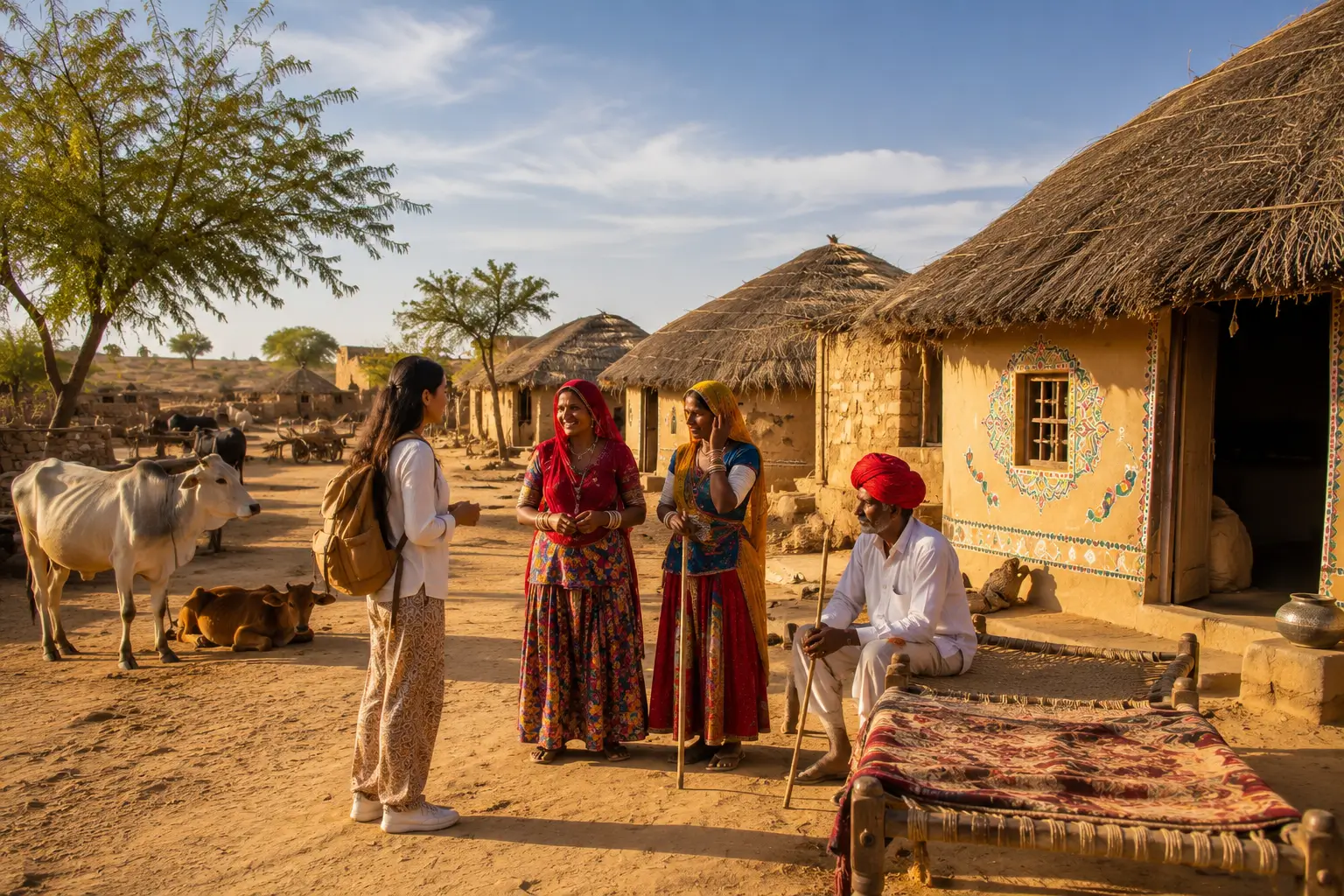
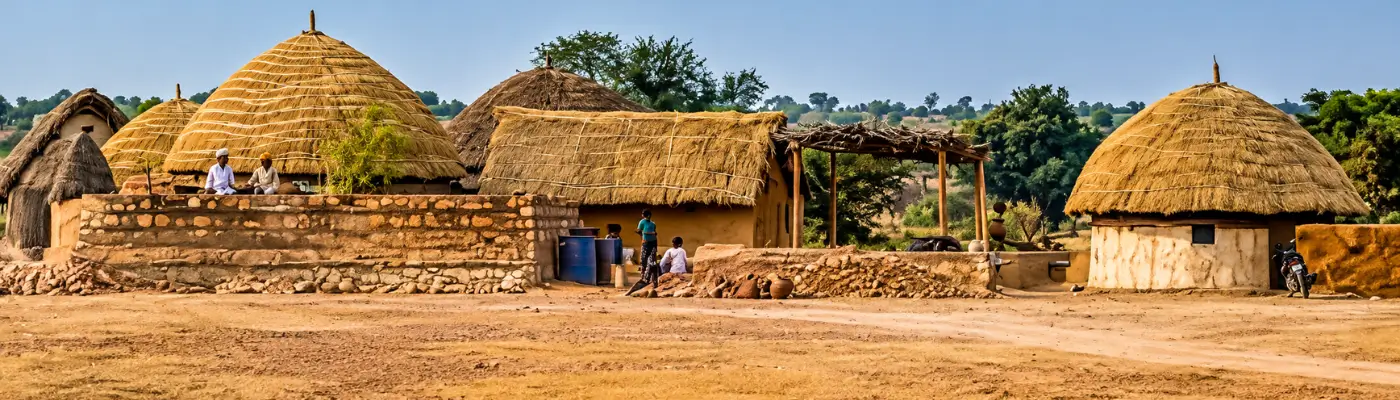
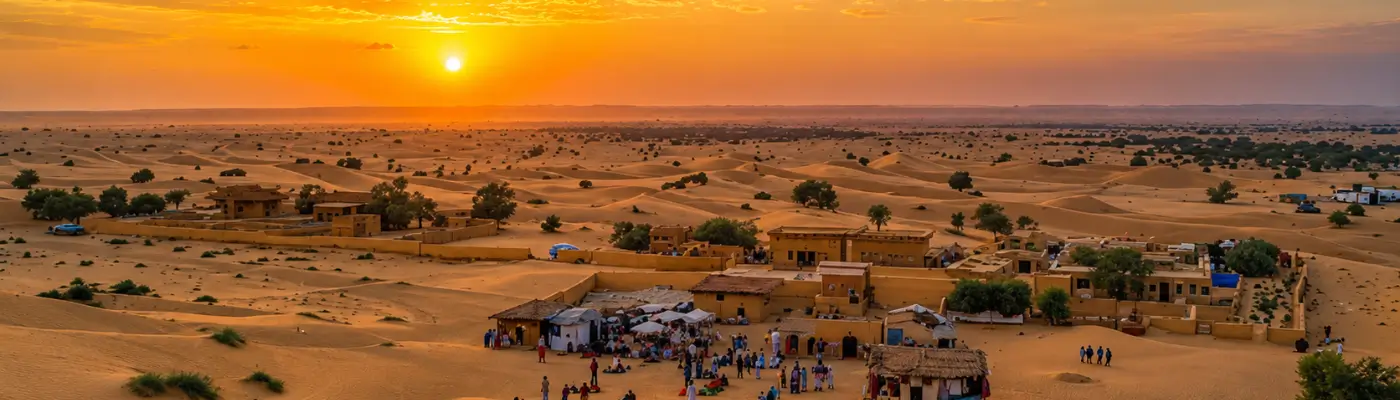
A village tour in Jaisalmer reveals the Thar Desert beyond its forts and dunes, offering a respectful introduction to rural homes, water-wise architecture, livestock traditions, local food, handicrafts and everyday desert life. A thoughtfully arranged visit to a living settlement such as Khuri may include a hosted walk, conversation with residents, an artisan demonstration, traditional refreshments and an optional sunset near the dunes.
Travellers should distinguish a genuine community visit from a staged camp stop or an abandoned heritage site such as Kuldhara. The most meaningful tours are small, consent-led and locally hosted: residents choose what to share, visitors pay fairly for time and skills, and photography never comes before dignity. Approached with curiosity rather than intrusion, the experience becomes a cultural exchange that supports livelihoods while revealing how communities have adapted to the beauty and challenges of the desert.
Step beyond the familiar and discover the living soul of the Thar with Rang Mahal, Jaisalmer. Private transport, a trusted local host, village activities, traditional refreshments and an optional dunes experience can be arranged according to your interests.
Book now for a thoughtfully curated village tour and ask about available seasonal offers. All community visits and activities remain subject to local consent, weather and host availability.
| Detail | Practical information |
|---|---|
| Recommended living-village experience | Khuri or a pre-arranged settlement in the Sam–Kanoi region |
| Popular heritage alternatives | Kuldhara, Khaba and Lodurva |
| Suggested duration | 4–6 hours, 7–9 hours with dunes, dinner or camp activities |
| Best season | November to March |
| Best time | Morning or late afternoon to sunset |
| Comfortable group size | Approximately 2–8 guests |
| Recommended transport | Private AC car or SUV |
| Facilities | Basic and variable outside the city |
| Essential requirement | Advance permission for homes, workshops, meals and photography |
Khuri is used below as the reference point because it offers a combination of a living desert settlement, rural interaction and nearby dunes. Distances and travel times are approximate and may change with the selected route, roadworks, traffic and the exact meeting point inside the village.
| Starting point | Approximate distance | Estimated travel time |
|---|---|---|
| Rang Mahal, Jaisalmer | 40–45 km | 50–75 minutes |
| Jaisalmer Railway Station | 50–55 km | 1–1½ hours |
| Jaisalmer Airport | 50–60 km | 1–1½ hours |
| Jaisalmer Fort | 47–52 km | 1–1½ hours |
Private AC car or SUV: The most convenient option for families, couples and senior travellers. It permits flexible stops, comfortable return after sunset and easy carriage of water or mobility equipment.
Pre-arranged group vehicle: Suitable for small groups when the vehicle, driver, host and village programme have been confirmed in advance.
Motorcycle or self-drive car: Possible for experienced travellers during daylight, but not ideal after sunset or during dust, rain, extreme heat or unfamiliar rural-road conditions.
Public bus or shared vehicle: Services may be limited, irregular or unsuitable for a time-bound hosted visit. Confirm the current route and return availability locally before depending on this option.
A “village tour” can mean either a visit to a living community or an exploration of an abandoned historical settlement. Travellers should understand this distinction before booking.
| Place | Type and access | Comfort and environment | Main advantages | Points to consider |
|---|---|---|---|---|
| Khuri | Living desert village, approximately 45–50 km from Jaisalmer | Quiet rural setting with nearby dunes facilities range from basic to camp-style | Genuine hosted interactions can be arranged dunes and sunset nearby suitable for food, craft and cultural experiences | Longer drive facilities and mobile signal may be limited community activities require advance consent |
| Kanoi–Sam region | Living settlements approximately 35–45 km from the city | Easy access to camps and safari infrastructure busier tourist environment | Convenient for camel safari, camp stay and dinner combinations wider choice of vehicles and tourist facilities | More commercial some programmes may be staged confirm whether residents and performers are paid fairly |
| Lodurva | Historic village and former capital, approximately 15–17 km from Jaisalmer | Paved access and relatively easy visit temple-focused atmosphere | Shorter journey Jain heritage and architecture suitable for seniors and cultural travellers | Primarily a heritage and spiritual visit rather than deep rural-life immersion follow temple rules |
| Kuldhara | Abandoned heritage village, approximately 18–20 km from Jaisalmer | Managed sightseeing environment with ruins and open desert landscape | Atmospheric history, architecture and photography easy to combine with desert routes | Not a living-village tour no resident-community interaction limited shade |
| Khaba | Ruined fort and largely abandoned historical settlement, approximately 30–35 km away | Remote, quiet and rustic | Landscape photography, fort ruins and desert heritage | Basic facilities, uneven surfaces and little shade not suitable for visitors expecting a hosted living-village experience |
| Months | Approximate conditions | Recommended time |
|---|---|---|
| November–February | Cool mornings and evenings approximately 5–33°C across the season | 8:30–11:30 AM or 3:00–6:00 PM |
| March | Pleasant mornings but increasingly hot afternoons approximately 13–39°C | 7:30–10:30 AM or 4:00–6:30 PM |
| April–June | Very hot, dry and occasionally dusty temperatures may exceed 40–45°C | Preferably postpone otherwise use a very short early-morning programme |
| July–September | Hot, occasionally humid, with possible rain or rough rural roads | Early morning or late afternoon after checking weather and road conditions |
| October | Warm days and improving evenings approximately 18–40°C | 8:00–11:00 AM or 3:30–6:30 PM |
Best overall recommendation: Plan the village tour between November and March, preferably in the morning or during the final three hours before sunset. Desert temperatures can change quickly, so check the short-term forecast before departure.
| Season | What to wear |
|---|---|
| November–February | Breathable daytime clothes, a warm jacket or shawl, full-length trousers, closed shoes and an additional evening layer |
| March and October | Light cotton clothing, hat, sunglasses, scarf and comfortable walking shoes |
| April–June | Loose full-sleeved cotton clothes, wide-brimmed hat and maximum sun protection avoid dark or heavy clothing |
| July–September | Light quick-drying clothing, non-slip shoes and a compact rain layer if showers are forecast |
Modest clothing covering the shoulders and knees is respectful when entering a village, religious place or private home.
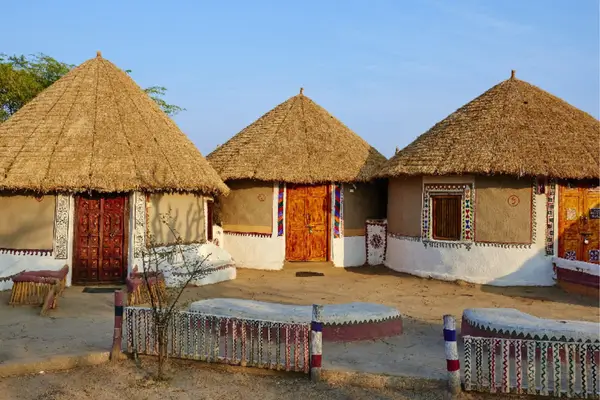
| Traveller | Special preparation |
|---|---|
| Adults | Hydrate before departure, wear sun protection and respect community boundaries |
| Infants | Avoid hot-weather visits carry feeding supplies, shade, extra water, nappies and a suitable child seat or carrier |
| Children | Keep them supervised near wells, animals, roads and cooking fires explain photography and cultural etiquette beforehand |
| Pregnant travellers | Obtain medical advice for long or bumpy travel avoid camel rides, dune driving and prolonged heat exposure |
| Senior citizens | Select a shorter route with vehicle access, shaded seating, toilet planning and limited walking |
| Guests with limited mobility | Confirm surface conditions, step-free access, seating and vehicle proximity before booking |
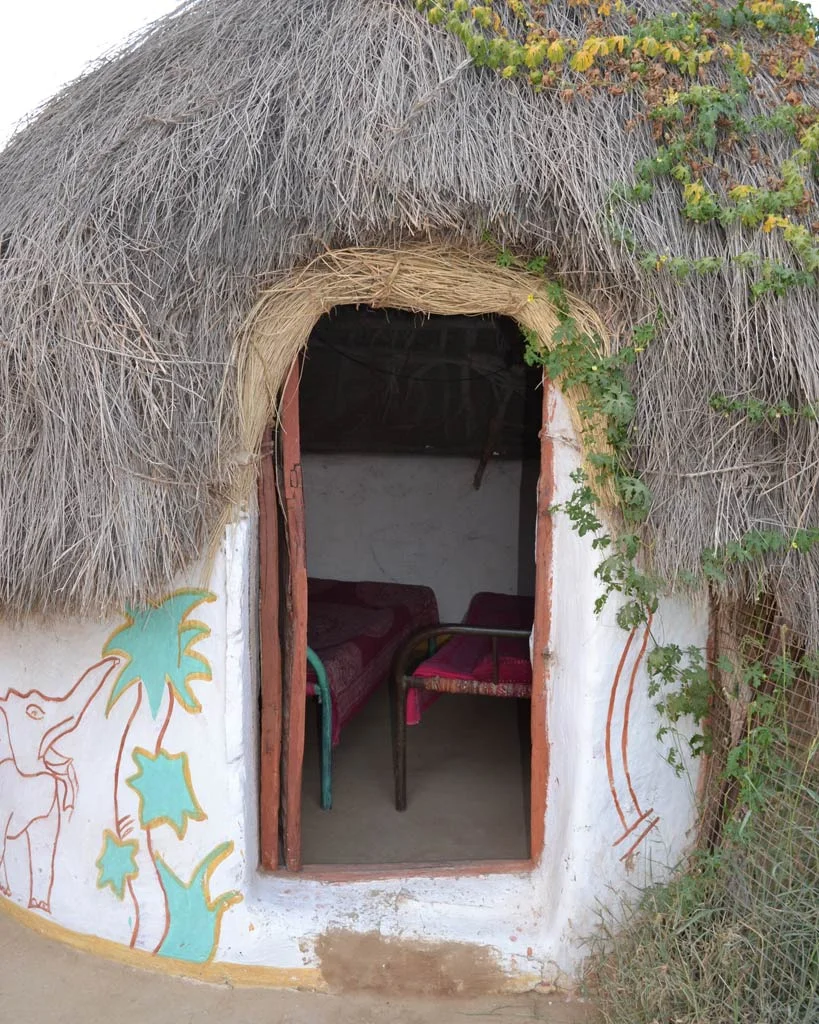
A pre-arranged village meal can deepen the cultural experience while directly supporting the host family or community enterprise. The meal must be requested in advance and paid for fairly.
Suggested dishes and beverages include:
Ask about ingredients if you have allergies, diabetes or dietary restrictions. Use filtered or sealed drinking water, and do not expect an unplanned household to provide a meal. Vegetarian food is generally the easiest option unless another menu has been specifically arranged.
Facilities differ greatly between villages and individual hosts.
Guests needing specific facilities should have them confirmed before leaving Rang Mahal, Jaisalmer. Fuel, cash, medicines and essential supplies are best arranged in the city.
For emergencies in India, dial 112. Rajasthan also lists 108 for emergency medical services and 100 for police assistance.
A village is a living community, not an open-air exhibition.
This information provides general travel and cultural-etiquette guidance and does not replace local host instructions or medical advice.
Depending on the selected village and host availability, the excursion may be combined with:
Khuri village walk + hosted refreshments or meal + dunes sunset offers a balanced introduction to rural life and the desert landscape.
A Kanoi–Sam village experience + camel safari + cultural programme + dinner at a desert camp is more convenient for travellers who prefer a lively, organised evening.
| Approximate time | Suggested activity |
|---|---|
| 8:00 AM | Departure from Rang Mahal, Jaisalmer |
| 9:00 AM | Arrival and introduction by the local host |
| 9:15–11:00 AM | Village walk and pre-arranged craft or livelihood demonstration |
| 11:00 AM | Tea, refreshments or early traditional meal |
| 12:00–1:00 PM | Return to Rang Mahal, Jaisalmer |
| Approximate time | Suggested activity |
|---|---|
| 2:30–3:00 PM | Departure from Rang Mahal, Jaisalmer |
| 4:00 PM | Hosted village walk |
| 5:00 PM | Craft, cooking or cultural interaction |
| Sunset | Dunes visit with an optional camel experience |
| Evening | Pre-arranged meal or folk performance |
| 8:30–9:30 PM | Return to Rang Mahal, Jaisalmer |
Timings should be changed according to the season, sunset, local routines and community consent.
A well-planned tour may include private transport, a local host, village walk, artisan interaction, refreshments and an optional meal, camel ride, dunes sunset or cultural programme. Inclusions should be confirmed before departure.
Khuri is a suitable choice for travellers seeking a living desert settlement with nearby dunes. The Kanoi–Sam region is convenient for camp and safari combinations. Kuldhara is an abandoned heritage village, not a resident-community experience.
Khuri is approximately 40–45 km from Rang Mahal, Jaisalmer and normally takes about 50–75 minutes by private vehicle. Actual travel time depends on the route and road conditions.
Allow approximately four to six hours for a half-day visit. A village walk combined with dunes, dinner or a camp programme may require seven to nine hours.
November to March is generally most comfortable. Choose the morning or late afternoon and avoid prolonged outdoor visits during the summer midday heat.
Yes, when the route is adapted to their needs. Confirm short walking distances, vehicle access, toilets, shaded seating and meal arrangements in advance.
Only when a resident or authorised local host has invited them. Homes and private courtyards should never be entered without clear permission.
Photography requires informed permission. Ask before photographing residents, homes, religious practices or workspaces. Guardian consent is essential for identifiable photographs of children.
Direct distribution is discouraged. Support local livelihoods through fairly priced crafts, hosted meals, guiding or an agreed community initiative.
No. Camel riding is entirely optional. Guests may choose a village walk, vehicle-based sunset visit or cultural programme instead.
Basic facilities may be available at selected hosts, homestays or nearby camps, but they should be confirmed during booking. Do not assume that every village has a visitor toilet or restaurant.
A stay may be arranged through a suitable registered or verified rural guest house, homestay or camp. Travellers preferring greater comfort can return to Rang Mahal, Jaisalmer after the excursion.
Yes. Rang Mahal, Jaisalmer can assist with a private vehicle, local coordination, hosted activities, meal arrangements and optional desert experiences, subject to consent and availability.
"माटी री महक अर मनखां रो मान—ई है मरुधरा री सच्ची पहचान।"
"The fragrance of the earth and the dignity of its people—this is the true identity of the desert."
Come as a guest, listen as a friend and return carrying a little of Marudhara in your heart.
